
Why a Lo-Fi UGC Video Can Beat a $50K Commercial
Lo-Fi UGC is outperforming high-budget ads. See why creator-shot videos are winning attention and driving results across Meta and TikTok.
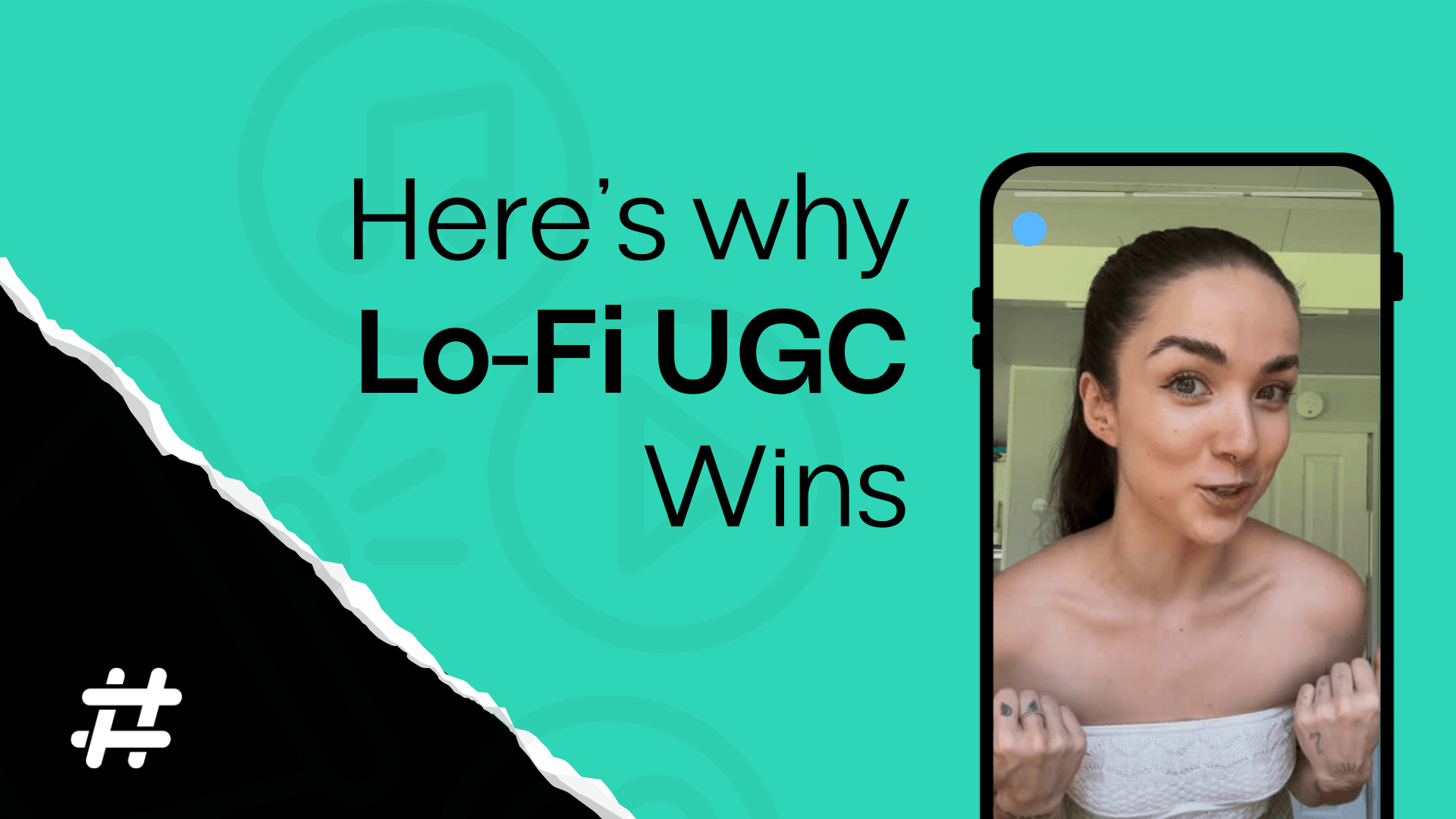
Lo-fi UGC, or low-fidelity user-generated content, is creator-made content that feels like it belongs on TikTok, Reels, Shorts, and the modern feed.
A $50K commercial can look incredible and still get outperformed by a phone-shot creator video.
Not because lo-fi content is “better”, but because it behaves better in the feed. It looks native, earns attention fast, and makes the product feel real. A slightly wobbly iPhone clip in natural light, with captions and a strong hook, often pulls the metrics performance teams actually care about.
That’s the lo-fi UGC advantage: one big polished swing versus a repeatable system for learning what sells.
What lo-fi UGC actually means Lo-fi UGC, or low-fidelity user-generated content, is creator-made content that feels like it belongs on TikTok, Reels, Shorts, and the modern feed.
It’s usually: [li indent=0 align=left]Shot on a phone[li indent=0 align=left]Filmed in real locations (home, car, gym, backyard, store aisle)[li indent=0 align=left]Minimal production (no studio lights, no big crew)[li indent=0 align=left]Simple editing (cuts, captions, voiceover)[li indent=0 align=left]Delivered like a real person talking to real people Important: lo-fi is not low effort. The effort shifts from production to messaging, structure, and proof. Check out our UGC Ads Library page with over 2000 lo-fi videos
Why lo-fi often wins: it owns the first 2 seconds People don’t watch ads. They tolerate them for about two seconds and decide if you’ve earned the next two. Polished commercials can scream “brand talking at you”. Lo-fi UGC feels like: [li indent=0 align=left]a recommendation[li indent=0 align=left]a quick demo[li indent=0 align=left]a mini review[li indent=0 align=left]a mate showing you something worth trying Because it doesn’t feel like a hard sell, it wins attention early, and that flows through to better retention, stronger engagement, higher click-through rates, and more conversions.
The performance economics: one big bet vs lots of small bets A $50K commercial is usually one concept, one cast, one edit, one tone. If it flops, you can tweak it, but you can’t un-bake the cake. Lo-fi UGC works differently. It’s a testing engine.
Instead of betting everything on one hero ad, you test: [li indent=0 align=left]multiple hooks (learn more about winning hooks here)[li indent=0 align=left]multiple creators[li indent=0 align=left]multiple formats (testimonial, demo, vlog-style)[li indent=0 align=left]multiple lengths (6 to 10s, 15s, 30s) That’s the real unlock. Lo-fi isn’t just content. It’s creative R&D. More shots on goal means faster learnings and less guessing.
Lo-fi is built for the way people actually buy Commercials often aim for brand theatre, while lo-fi UGC focuses on buyer clarity by answering the simple questions people actually ask before they buy: what is this, is it for someone like me, does it work, how do I use it wear it or choose it, and what should I do next.
That’s why lo-fi UGC hits hardest in categories where real-life context reduces doubt, like FMCG, fashion and apparel, beauty, pet, and home and lifestyle. If seeing it “in real life” makes the decision easier, lo-fi is your best friend.
The feed rewards native, not perfect Short-form platforms are built around creator behaviour, not brand behaviour. Lo-fi looks like what people already watch, so it blends in and earns attention. A cinematic commercial can still work, but it often has to fight two battles: [li indent=0 align=left]it looks like an ad[li indent=0 align=left]it behaves like an ad Lo-fi behaves like content first, then sells.
When lo-fi flops (because yes, it can) Lo-fi doesn’t automatically win just because it’s filmed on a phone. It flops when there’s no hook in the first 1 to 2 seconds, the creator rambles (no one owes you patience), the product shows up too late, the proof is vague (all vibes, no clarity), captions are missing (most people scroll on mute), or the creator makes risky claims and the ads get rejected. Lo-fi needs structure, not a film crew.
How to get started with lo-fi UGC Start with a simple plan, not “let’s make a video”. Here’s a clean way to do it: [li indent=0 align=left]Pick one product and one outcome (what do you want the viewer to believe or do?)[li indent=0 align=left]Write 5 hooks (different angles, not different words)[li indent=0 align=left]Choose 2 to 3 creator styles (different faces, tones, audiences)[li indent=0 align=left]Produce variations (different hooks, different openings, different lengths)[li indent=0 align=left]Test, keep winners, remix the rest If you want the easiest shortcut, work with a UGC platform like Creator Flow. We connect brands and agencies with the right creator talent to produce lo-fi, phone-shot content that feels native to the feed and is made for performance.
Want to start small? Try the Starter Pack to get your first batch of lo-fi UGC videos and test what works.
When a $50K commercial is still the right move High production isn’t dead, it just has a different job. A $50K commercial makes sense when you’re building brand stature and consistency, launching into retail or major partnerships, needing tight control for compliance, running TV, OOH, cinema or sponsorships, or creating a hero asset meant to live for a long time. Lo-fi is built for iteration, while high production is built for the brand platform.
The takeaway Lo-fi UGC can beat a $50K commercial because it’s not trying to be impressive, it’s trying to be believable, clear, native to the feed, quick to produce, and easy to test and refresh. If your goal is performance, the winner is rarely the prettiest video, it’s the one that makes someone stop, understand, trust, and act.